
Introduction
This article explains an ArchiMate® viewpoint, the Strategic Planning viewpoint which has been made by our team within the Dutch Ministry of Defence. We have found this viewpoint to be particularly effective in partitioning the transformation effort (which as you might understand is substantial within the context of Defence!).
Strategic alignment is often overlooked. It usually focusses on strategic views such as a Capability Map, but often leaves it at that. We then miss how these strategic landscapes are actually trickling down into the actual solutions.
Or we dive into possible solutions, usually taking too little or no effort to really understand what the problem is and what approach to take.
Capability-based planning
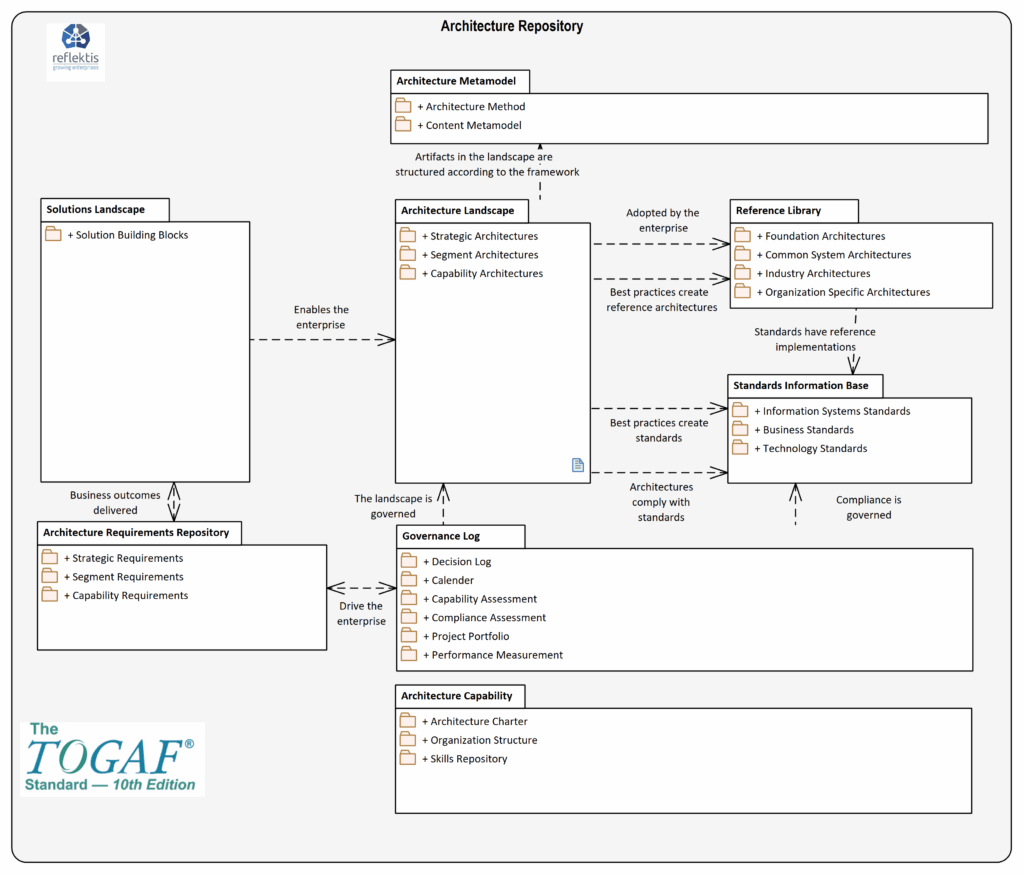
A central tenet of our approach is not specific for Defence, but becoming quite the standard in business architecture. As you may recall, TOGAF specifies a stratified approach to modelling regarding the content of the architecture repository, specifically the part called the Architecture Landscape. The architecture repository of the Dutch Ministry of Defence and most of the enterprise repositories I have worked with in my career have a similar structure:
- Strategic architectures
Architectural descriptions for organisation-wide things, expecting to be generic to any part of the enterprise. One of the descriptions is the Capability Map. - Segment architectures
Descriptions specific for the different main components of the enterprise. An example segment within the MoD would be the Navy. The term "domain" can be viewed as a synonym. - Capability architectures
This is where we describe the various capabilities (within the MoD termed "enterprise capabilities" to distinguish them from the military and NATO capabilities, which we decided to label "operational capabilities") and how they are realised by services and underlying business, software and technology. This approach partitions the solutions landscape according to the capabilities defined in the Capability Map mentioned above.